


![Idigitalie Logo [1]](https://idigitalise.net/wp-content/uploads/2025/11/Idigitalie_Logo_1.png)
- Case Studies
-
- Our Work
-
-
-

We serve top companies and the fastest-growing startups. iDigitalise boosts conversion rates.
-
-
-
- Pricing
-
- About
-


We serve top companies and the fastest-growing startups. iDigitalise boosts conversion rates.

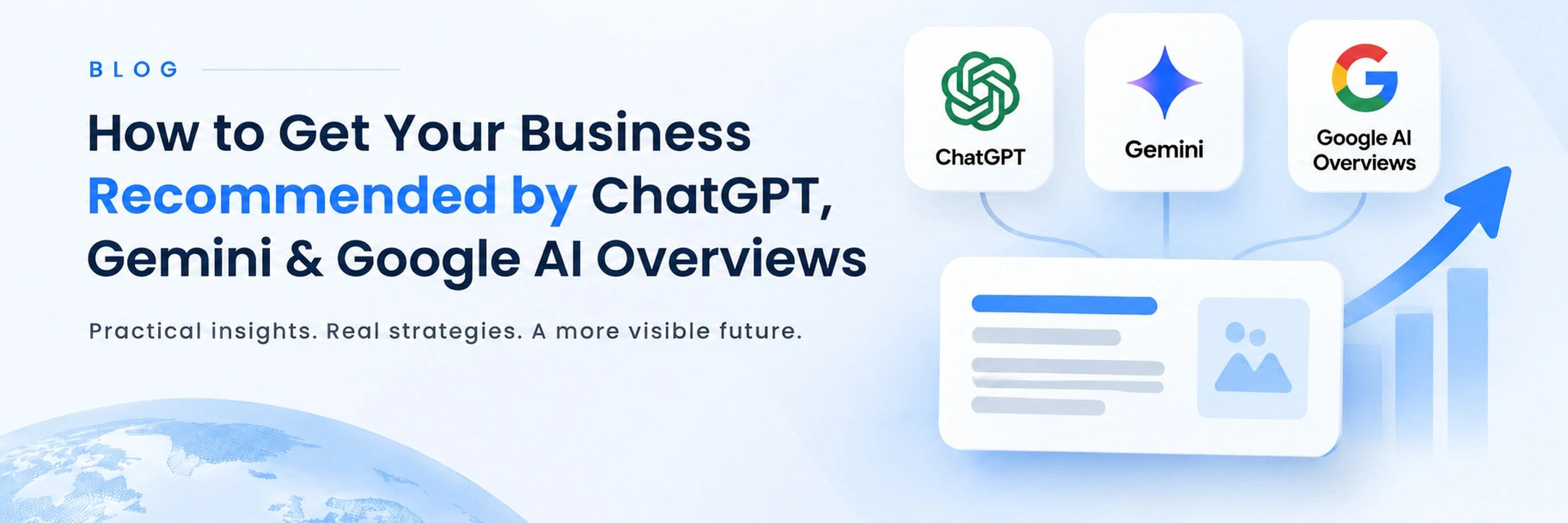
For years, businesses have competed for visibility on Google because search rankings directly influenced website traffic, enquiries, and revenue. A company appearing on the first page of Google had a better chance of attracting customers because users trusted search engines to help them find the right products, services, and solutions.
That model is still important. Google remains one of the most powerful sources of online discovery, and strong SEO remains a foundation for digital growth. However, customer behaviour is changing. Today, people use AI assistants not just to find information but also to compare options, research brands, and make decisions.
A founder looking for a tech partner might not just look:
“Software development company India”
They may ask:
“Which software development company has experience in building a scalable SaaS platform for my startup and working in international markets?”
A marketing head looking for an SEO partner would not simply type:
“SEO agency India”
They may ask:
“Which SEO agency has experience helping B2B companies generate qualified international leads?”
These searches tell us more about what the user actually needs. AI platforms understand this context and try to provide more relevant recommendations.
This is where AI SEO (Artificial Intelligence Search Engine Optimisation) comes into play.
AI SEO is all about assisting search engines and AI platforms to understand your business, your expertise, your content and your reputation. The goal isn’t just to rank a web page, but to be an authority that artificial intelligence systems can confidently refer to.
For businesses, the next search opportunity is transitioning from:
Getting discovered → Getting trusted → Getting recommended
Search has always evolved in response to how people consume information.
In the early days of the internet companies struggled to get themselves listed in directories and search engines like Yahoo, AltaVista and Lycos. Search used to be mostly about matching keywords to web pages. If you had an online presence you were more likely to get found out.
Google changed the game with an emphasis on relevance, authority and user experience. SEO is now a lot more strategic with businesses investing in content, technical optimisation, backlinks, website performance and customer experience.
And right now we’re in the midst of another big transition. Search is more than a collection of web pages. AI-powered platforms are turning search into a conversation, allowing users to ask complex questions and get direct answers.
| Period | Search Behaviour | Business Focus |
| Before 2000 | Directory-based discovery and simple keywords | Build online presence |
| 2000–2015 | Google became the dominant search platform | Rank higher and increase traffic |
| 2015–2023 | Mobile and personalised search grew | Improve experience and relevance |
| 2024 onwards | AI assistants influence discovery | Build authority and become recommended |
The search journey is changing:
User → Search Engine → Website → Decision
User → AI Platform → Recommendation → Decision
But this doesn’t mean the end of traditional SEO. In fact, companies with a good SEO foundation will have an advantage as AI platforms are also built on quality content, technical accessibility, authority and trustworthy information.
The difference is that future visibility will require businesses to optimise not only for rankings but also for recommendations.
Businesses often ask an important question:
“Will AI replace Google?”
The answer is more complicated.
Google is still the world’s most popular search engine, but the customer discovery process is diversifying. Users are increasingly combining traditional search with AI tools depending on what they are trying to achieve.
For example:
| User Requirement | Traditional Search | AI Search |
| Find a company | Search business websites | Ask AI for recommendations |
| Compare solutions | Open multiple pages | Ask AI for comparison |
| Understand a topic | Read articles | Get summarised answers |
| Make a decision | Research manually | Use AI assistance |
The future is unlikely to be one platform replacing another. Instead, businesses will need visibility across multiple discovery channels.
| Market | Current Search Behaviour | AI Opportunity |
| USA | Strong Google usage with growing AI adoption | Build ChatGPT, Gemini and AI search visibility |
| India | Google remains dominant | Early AI SEO advantage for businesses |
| Europe | Google-led with multilingual requirements | Build authority across languages and markets |
| UAE & Middle East | Digital-first customers researching online | International AI visibility opportunity |
| Australia | Strong Google presence | Growing AI-assisted research |
| Africa | Mobile-first digital growth | Early opportunity to establish authority |
The businesses that prepare early can build stronger digital authority before AI search becomes more competitive.
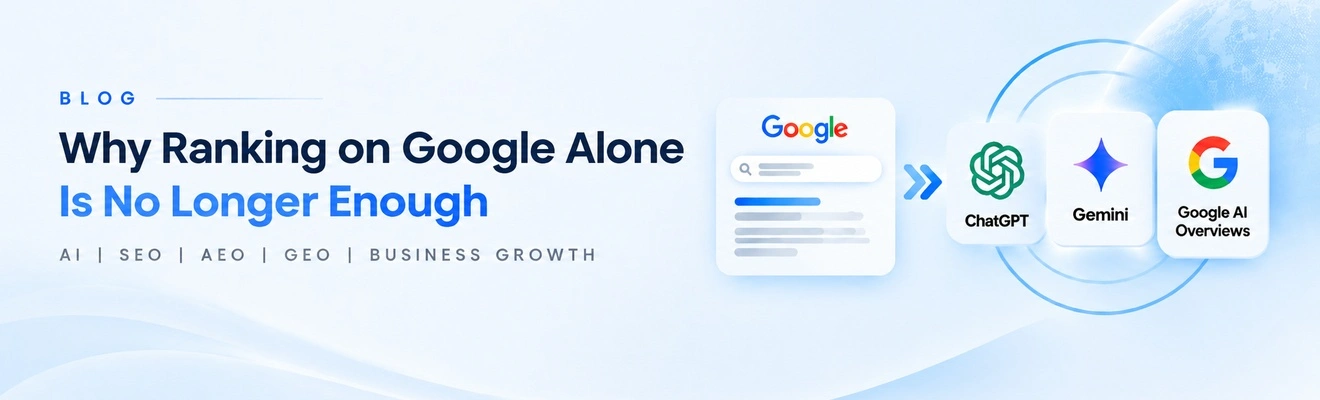
Many businesses have invested heavily in SEO but still struggle to become recognised as industry leaders.
The reason is that ranking and recommendation are not exactly the same thing.
A webpage can rank for a keyword because it matches a search query. But an AI platform has to understand whether a company is really suitable for a user requirement.
For example, two companies may rank for:
“Digital marketing agency”
But when a user asks:
“Which digital marketing agency can help a manufacturing company generate international leads?”
More context needed for AI platforms.
They look for signals such as:
A company that only talks about its services may find it hard to stand out.
A company that shows its knowledge with guides, case studies, research and customer results has a greater chance of being a trusted recommendation.
The answer is not simply to take a handful of keywords from a website and match them up if a potential customer asks ChatGPT, Gemini or Google AI Overviews for a business recommendation. AI platforms try to understand the full context of the question and determine which businesses seem relevant, trustworthy, and able to solve the user’s problem.
For instance, a company looking to partner with an SEO company may not just want an agency that provides SEO services. It may want an agency that understands B2B lead generation, international markets, technical SEO, content strategy and conversion optimisation. An AI platform requires sufficient data to distinguish the differences before it recommends a business.
That’s why businesses that just focus on adding keywords to their website may struggle in AI search. AI platforms need better signals of experience, expertise, and credibility. Google has also stressed that producing original, helpful, people-first content and keeping strong SEO fundamentals are still critical to visibility in generative AI search experiences.
At iDigitalise we’re seeing a shift in the way businesses are approaching search growth. Until now, most companies were asking questions like, “How do we rank higher on Google?” “How can customers discover and trust our brand as they search through AI platforms?” founders and marketing teams are asking today.
This is creating a new opportunity for businesses that build authority rather than just chasing rankings.
The main AI visibility signals are:
| AI Search Signal | Why It Matters |
| Helpful, detailed content | Helps AI understand your expertise and solutions |
| Industry-specific pages | Shows relevance for specific customer needs |
| Case studies | Demonstrates real experience and outcomes |
| Customer reviews | Builds trust and credibility |
| Digital PR mentions | Improves brand authority |
| Expert insights | Shows knowledge and experience |
| Technical SEO | Helps search engines access and understand information |
| Clear business information | Helps AI understand your company identity |
A company can’t just tell the AI platforms that it’s the best option. It needs to build a digital footprint that backs up that claim with valuable information, proof from clients and expertise in the industry.
AI SEO (Artificial Intelligence Search Engine Optimisation) is the process of optimising your website, content and online reputation so your business can be found across AI-driven search experiences.
For the most part, SEO has been about ranking for certain keywords. AI SEO takes it a step further by helping search engines understand the context of your business as a whole; what you do, who you serve, what your expertise is, and why customers should trust you.
For example, a healthcare company shouldn’t just optimise a page around the keyword “best healthcare clinic.” A more solid AI SEO approach would allow search engines to look at the whole picture, encompassing doctor expertise, treatment information, patient education, reviews, and healthcare authority.
In the same way, a B2B manufacturing company shouldn’t just list its products. It should show technical expertise through product guides, industry applications, certifications, manufacturing capabilities and customer success stories.
AI platforms need context before they can confidently recommend a business.
A strong AI SEO strategy combines:
The goal is not only to attract visitors.
The goal is to attract the right visitors who are more likely to become customers.
SEO for ChatGPT refers to optimising your online presence to improve the likelihood of appearing when users enquire about your industry, services, or solutions to ChatGPT.
Many companies ask:
“How can we rank on ChatGPT?”
The answer is not the traditional Google SEO. There is no shortcut where adding more keywords or publishing large volumes of content automatically makes a business appear in AI recommendations.
Instead, businesses need to create a stronger digital identity.
AI platforms need to understand:
Consider these two examples.
Basic Positioning:
“We offer digital marketing services.”
Stronger AI-Friendly Positioning:
“We help B2B manufacturers, healthcare companies, SaaS businesses and international brands increase online visibility and drive qualified leads through SEO, AI search optimisation, content strategy and digital PR.”
The second example gives us a lot more context. Search engines and AI platforms can better understand the company’s expertise, target audience and value proposition.
Accurate positioning is becoming an important part of modern search visibility.
As AI search progresses, businesses are hearing terms like SEO, AEO and GEO. Although related, these approaches target different parts of the search journey.
| Strategy | Meaning | Primary Goal |
| SEO | Search Engine Optimization | Improve visibility in traditional search results |
| AEO | Answer Engine Optimization | Provide direct answers to customer questions |
| GEO | Generative Engine Optimization | Improve visibility in AI-generated responses |
| AI SEO | Complete AI search strategy | Build visibility across search and AI platforms |
SEO is all about making a website more visible when users search through platforms like Google.
For example:
“AI SEO agency India”
The goal is to rank for relevant searches and attract qualified visitors.
AEO focuses on creating content that gives customers clear answers to their questions.
As an example:
“What is AI SEO and why is it important?”
Good answers get seen more in featured snippets, voice search and AI answers.
GEO is focused on improving the chances of your business being mentioned in AI generated answers.
For instance:
“Which companies provide AI SEO services?”
The aim is not only to show up in search results, but to be part of the answer that customers get.
Google has said that there are no special shortcuts or “AI hacks” to get visibility in generative search. The focus should be on strong SEO fundamentals, unique content and providing real value to users.
1. Create Content That Solves Customer Problems
One of the biggest mistakes businesses make is creating content simply because a keyword has search volume. Keyword research still has value, but today’s search is about understanding the questions, pain points, and decision-making process of your customers at a much deeper level.
One traditional way would be to create a page called:
“Digital Marketing Services”
A more powerful AI SEO approach would create resources like:
This type of content assists customers in making better decisions and gives search platforms more context about your expertise.
2. Build Topic Authority Instead of Publishing Random Content
Just because you have a lot of unrelated blogs doesn’t mean you have authority. Businesses that know a lot about something are more likely to be understood and trusted by AI platforms.
A better strategy is to build content clusters around your expertise.
For example:
| Core Topic | Supporting Content |
| AI SEO | Complete AI SEO Guide |
| ChatGPT SEO | How Businesses Can Improve ChatGPT Visibility |
| GEO | GEO vs SEO Explained |
| AEO | How to Create Answer-Focused Content |
| Google AI Overviews | How AI Search Impacts Businesses |
This helps both the users and search platforms to know what your business specialises in.
3. Strengthen E-E-A-T Signals
Google and AI platforms increasingly value experience, expertise, authority, and trust.
Businesses should demonstrate:
Experience
Show real work through:
Expertise
Demonstrate knowledge through:
Authority
Build recognition through:
Trust
Improve credibility through:
Google recommends creating content that demonstrates firsthand experience and unique value, not simply regurgitating information that’s easy to find online.
Companies want to increase search visibility of AI but make mistakes that decrease results in the long run.
AI tools can help with research and productivity, but just crapping out a bunch of generic content isn’t going to build authority. Businesses need original insights, industry experience, case studies and practical knowledge.
Modern search is more than simply word matching. AI platforms try to understand meaning, intent and utility. Content should answer real customer questions instead of simply repeating search terms.
A website is not the entirety of a business’s digital identity. The trustworthiness of the brand is also affected by customer discussion, reviews, online mention, and industry recognition.
Industries change quickly. Content that was useful two years ago may not answer today’s customer questions. Regular improvements help maintain relevance.
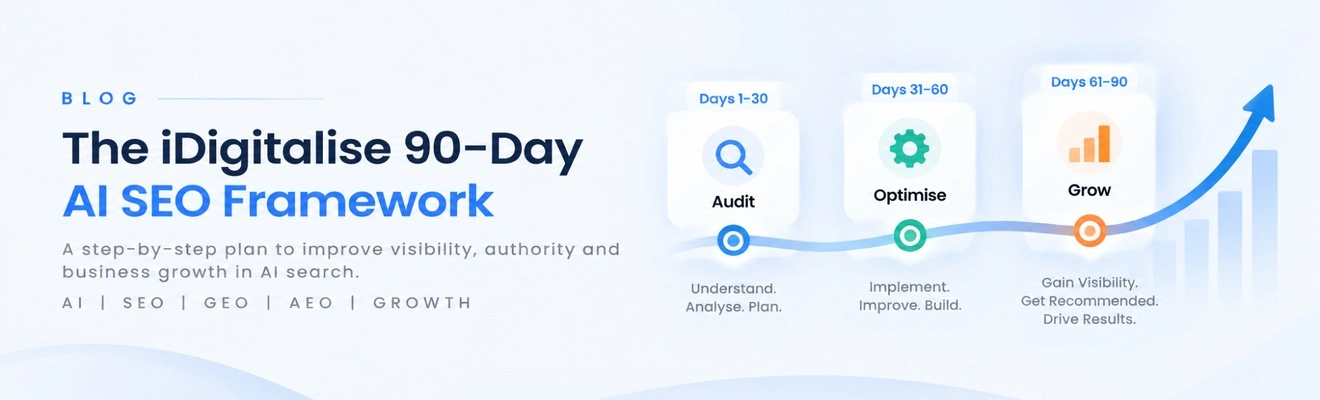
Gaining AI search visibility is a systematic process. Trust takes time to build, and it’s built on a foundation of consistently better content, technology, and reputation – businesses can’t become trusted recommendations overnight.
Month 1: AI Search Audit and Strategy
First, you have to know where you are with your business right now.
This includes analysing:
The goal is to discover where your business is appearing today and where the competition is ahead.
Month 2: Content and Authority Building
Once opportunities are identified, the focus shifts to building stronger digital resources.
This includes:
The goal is to create content that helps customers with decision making and helps AI to understand.
Month 3: Technical Optimisation and Growth Tracking
The final stage is to optimize the website and measure your improvements.
Activities include:
A successful AI SEO strategy is not a one-off activity. It has to be constantly improved to the behaviour of customers, competition and evolution of search.
Manufacturing buyers typically conduct significant research before choosing suppliers. AI SEO helps manufacturers increase visibility by creating content that demonstrates technical expertise and industry knowledge.
Important assets include:
Trust plays a huge role in healthcare decisions.” Patients need reliable information before they make a choice about doctors, clinics or healthcare providers.
AI SEO helps healthcare brands build credibility by:
Real estate buyers compare multiple projects before deciding. AI search visibility can help developers be more discoverable in the research stage.
Important content includes:
Technology buyers often research solutions before they ever contact sales teams. AI SEO helps SaaS businesses educate prospects and demonstrate expertise.
Helpful content includes:
AI search visibility is a long-term build. Putting a few AI-related keywords on your website’s pages won’t suddenly turn your business into a trusted recommendation.
Building authority takes sustained investment in content quality, technical SEO, customer trust, and brand awareness.
If companies start preparing now, they’ll build a stronger foundation before AI search becomes even more competitive.
The winners won’t necessarily be the companies that create the most content. They will be the ones producing the most useful, reliable and experience-based content for their customers.
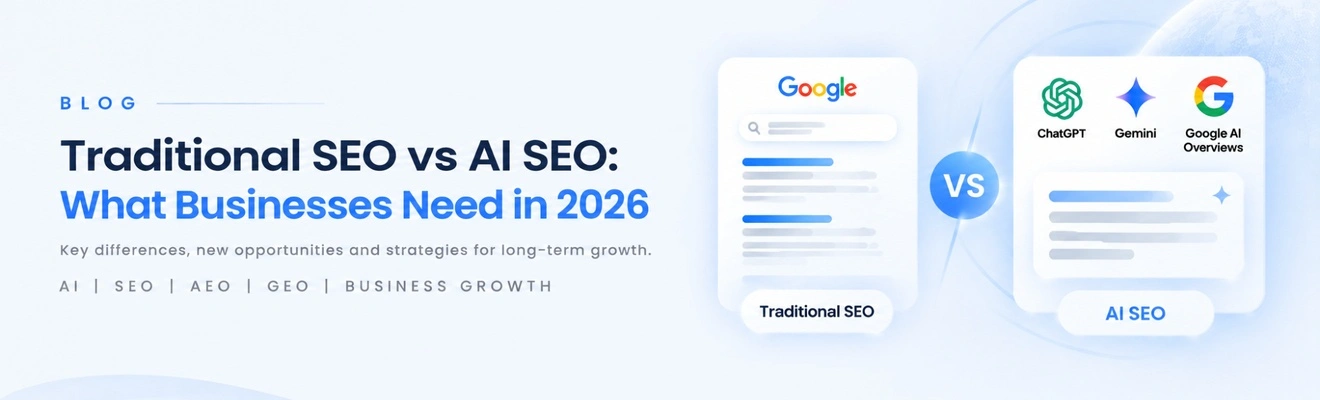
Years ago, success in SEO was measured in rankings, traffic and clicks. Companies wanted higher keyword positions, more organic visitors, and to drive more people to their websites. These metrics are still useful, but the search landscape is getting more complex.
Today’s customers want more than websites. They’re looking for answers, advice and reliable solutions. AI-powered platforms are changing the way users research companies, synthesise information, compare options and help make buying decisions.
That’s not to say that traditional SEO is going the way of the dodo. Businesses with strong SEO foundations are better positioned for AI search, because technical quality, useful content and authority still matter. But companies have to do more than just rank a webpage. They need to think about building a whole digital reputation.
The difference between traditional SEO and AI SEO is intent.
Traditional SEO asks:
“How can we rank this page for a specific keyword?”
AI SEO asks:
“How can we build enough trust and authority for AI platforms to recommend our business?”
| Traditional SEO | AI SEO |
| Focuses on ranking webpages | Focuses on building brand understanding |
| Targets keywords | Targets customer intent and problems |
| Measures rankings and traffic | Measures visibility, authority, and recommendations |
| Optimises individual pages | Optimises the complete digital presence |
| Focuses on search results | Focuses on AI-generated answers |
| Goal is more clicks | Goal is stronger customer influence |
For example, a traditional SEO strategy might focus on:
“Digital marketing agency India”
An AI SEO strategy is more than:
“Which digital marketing agency has experience helping B2B companies generate international leads?”
The second question is designed to determine whether the business has expertise, knowledge of the industry, and proven results.
The future of search will belong to businesses that combine strong SEO fundamentals with AI visibility strategies.
Many business owners understand that AI search is becoming important but are unsure whether their current digital presence is ready. This checklist can help you assess whether your business is ready to receive more visibility on ChatGPT, Gemini, Google AI Overviews and other AI-driven platforms.
1. Your Website Clearly Explains Your Expertise
AI platforms need to know what your company does, who you help and why customers should believe you. A website should not just list services. It should tell your story: your expertise, the industries you serve, the solutions you provide and the results you create.
Ask yourself:
A clean website sends stronger signals to customers and AI platforms.
2. Your Content Answers Real Customer Questions
Simple keyword matching is not how modern search is done anymore. Customers want answers that help them understand problems, compare alternatives, and make decisions.
Helpful resources, not just promotional pages, are what businesses should be creating.
For example, an SEO agency should not just post:
“SEO Services”
In an effort to create content around:
This type of content shows you know your stuff and attracts users looking for solutions.
3. Your Business Has Strong Authority Signals
AI platforms need to be sure before recommending a company. There are many different cues on your site and the internet at large that set up authority.
Key indicators of authority are:
Users and artificial intelligence systems are more likely to trust a company that has real experience.
4. Your Website Has a Strong Technical Foundation
Content quality isn’t sufficient. Your website needs to be easy to access, understand and interpret correctly by search engines and AI platforms.
Important technical elements include:
Technical SEO provides the foundation for your content and expertise to be found.
5. You Monitor AI Search Visibility
Traditional SEO reporting focuses on rankings and traffic. AI SEO requires businesses to look at a wider picture.
Businesses should monitor:
The businesses that continuously learn from search behaviour will have a stronger advantage.
At iDigitalise, we are seeing a significant change in how businesses approach digital growth. Earlier, most companies were focused on increasing website traffic and improving Google rankings. How do we make sure customers find and trust our brand when they’re researching solutions on AI platforms?” is the more strategic question business owners are asking today.
This shift is particularly important for businesses where the customer does some research on a company before reaching out. B2B organisations, healthcare providers, technology companies, real estate brands and international service providers are not only competing for search rankings, but also for credibility.
A company may have a great product or service but if AI platforms cannot clearly understand its expertise, industry experience or customer value, it may miss future discovery opportunities.
AI SEO bridges this gap by bringing together search optimisation, content authority, digital reputation and conversion strategy.
Visibility for AI search requires more than publishing blogs or adding AI-related keywords to a website. Businesses need a structured way to improve how search engines, AI platforms and customers understand the brand.
At iDigitalise we work with AI SEO in three key steps:
Phase 1: Understand — AI Search Audit & Opportunity Mapping
The first step is understanding where your business currently stands.
We analyse:
This helps identify what is preventing your business from gaining stronger visibility.
Phase 2: Build — Content Authority & Digital Foundation
Once opportunities are identified, the focus moves towards building stronger digital assets.
This includes:
The objective is to create a digital presence that answers customer questions and demonstrates expertise.
Phase 3: Grow — Authority, Visibility & Lead Generation
The final stage focuses on improving business outcomes.
Activities include:
The goal is not simply more visibility.
The goal is visibility that creates qualified business enquiries.
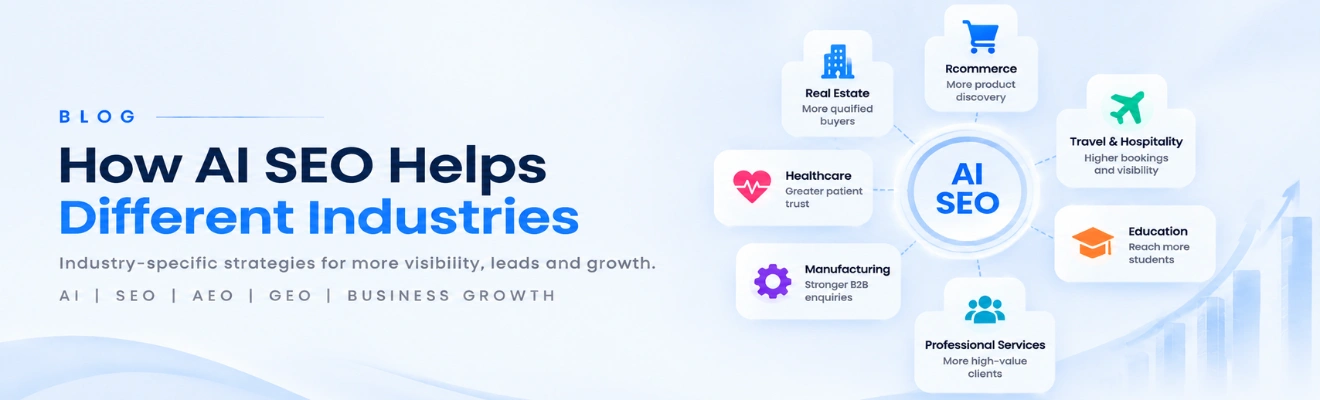
Manufacturing buyers often research suppliers, technologies, and solutions before starting a conversation. AI search creates an opportunity for manufacturers to become visible earlier in the buying journey.
For example, a buyer searching:
“ISO-certified industrial component supplier in Europe”
needs more than a basic product page.
AI platforms need to understand:
Businesses that provide this information clearly have stronger opportunities to be discovered.
Healthcare decisions are based heavily on trust and credibility. Patients want to have confidence before they select doctors, clinics, hospitals or wellness providers.
AI SEO helps healthcare brands build trust by:
A healthcare website should do more than sell services; it should teach and build confidence.
Usually, real estate investors consider and compare many projects, locations and developers before deciding.
AI SEO can help real estate businesses increase visibility by:
The idea is to be a trusted source during the research phase.
Technology buyers do a lot of homework before they contact sales teams.
AI SEO can demonstrate SaaS expertise by:
This allows potential customers to educate themselves on solutions prior to entering the sales process.
Many companies want to get more visibility for AI, but they make mistakes that hurt long term effectiveness.
AI tools can be helpful for content creation, but companies should not rely on producing a tonne of low-value content. Authority comes from real expertise, unique insights and pragmatic examples.
Keywords still help, but now search is about understanding intent. Businesses should be writing content that solves customer problems, not repeating search terms.
AI SEO is not a substitute for technical SEO, website performance and user experience. These foundations still govern how easily search engines can understand and evaluate a business.
It takes time to build authority. Early preparation can help businesses build more visibility before the AI search landscape gets more competitive.
The way customers find businesses is changing. The companies that get ahead of the game can build better authority, increase visibility and create more opportunities before competition grows.
If you are unsure where your business stands, an AI Search Visibility Audit can help identify:
At iDigitalise, we help businesses combine SEO, AI search optimisation, content strategy, digital PR, and conversion-focused improvements to build stronger digital growth.
Talk to our AI SEO specialists and understand your next growth opportunity.
1. What is AI SEO?
AI SEO is the process of optimising a business’s website, content, and online reputation so that AI platforms can better understand, discover, and recommend the business.
2. Is AI SEO replacing traditional SEO?
No. AI SEO is a build over traditional SEO. Technical optimisation, quality content, website performance and authority are still important for long-term search visibility.
3. How can my business appear in ChatGPT recommendations?
Businesses can improve their chances by building digital authority through useful content, industry expertise, customer reviews, case studies and a technically optimised site.
4. What is the difference between SEO and GEO?
SEO is about improving rankings in traditional search results. GEO is about improving visibility within AI-generated answers and recommendations.
5. How long does AI SEO take to show results?
The length of time it takes depends on your competition, the authority of your website, the quality of your content and your existing digital footprint. It’s a lot easier for an established brand to pick up steam, whereas a newer brand often needs more time to establish trust.
6. Is AI SEO useful for small businesses?
Yes. Small businesses can be big winners, as AI search creates opportunities for companies with deep expertise and customer-focused content to compete with larger brands.
Search is moving from a system where businesses compete only for rankings to a system where businesses compete for trust.
The companies that succeed in the next phase of search will not simply be the ones with the most keywords or the most content. They will be the ones that demonstrate genuine expertise, provide useful information, and build credibility across every digital touchpoint.
AI search is not changing the importance of trust.
It is making trust more visible.
The future of SEO is not only about being found. It is about being trusted enough to be recommended.